Call Now:
1300 192 70024 Months Manufacturer's Warranty
Click Here For More Information
Scroll Down For Further Information
Call Now:
1300 192 70024 Months Manufacturer's Warranty
Scroll Down For Further Information
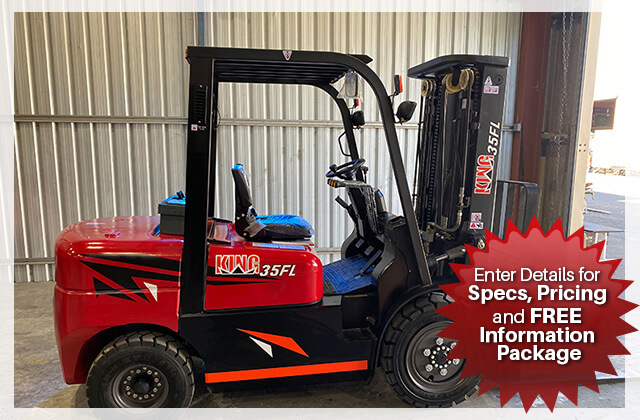
For further information about our range of products and prices, please enter your details in the form to get access to our detailed video tours, package options and the opportunity to have the information package posted out to you.
If you’re in the market for a forklift, one of the first big decisions you’ll face is simple:
Should you buy new or used?
The answer isn’t always straightforward, but choosing the right option can save your business thousands and set you up for smoother operations long term.
In this guide, we break it down in plain English so you can make the right call for your budget, workload, and future plans.
| Feature | New Forklifts | Used Forklifts |
|---|---|---|
| Upfront Cost | Higher | Lower |
| Reliability | Very high | Varies |
| Maintenance | Low early on | Can be higher |
| Lifespan | Longer | Shorter remaining life |
| Technology | Latest features | Older models |
If you’re still working out your budget, it’s worth checking current market pricing here
| Cost Factor | New Forklift | Used Forklift |
|---|---|---|
| Purchase Price | Higher | Lower |
| Running Costs | Lower over time | Can increase with age |
| Repairs | Minimal early on | More likely over time |
| Resale Value | Higher | Lower |
Buying new means a bigger upfront investment, but you get minimal maintenance early on, better efficiency, and a longer lifespan.
Used forklifts are ideal if you want to reduce upfront costs or only need the machine occasionally.
You can compare pricing across different options here
| Factor | New Forklift | Used Forklift |
|---|---|---|
| Breakdown Risk | Low | Higher |
| Warranty | Typically included | Often limited or none |
| Service Predictability | High | Varies |
| Parts Wear | Minimal | Depends on previous use |
A cheaper forklift can become expensive quickly if maintenance is not considered upfront.
| Your Situation | Best Option |
|---|---|
| Daily operations | New |
| Core business reliance | New |
| Long term investment | New |
| Occasional or seasonal use | Used |
| Tight budget | Used |
| Testing a new business | Used |
The best choice depends on how often you use the forklift and how critical it is to your operations.
Many buyers focus only on purchase price.
Instead, consider:
Total cost over time
Downtime risk
Impact on productivity
This is often where businesses make the wrong decision.
| Priority | Recommendation |
|---|---|
| Reliability and long term value | New forklift |
| Lower upfront cost and flexibility | Used forklift |
There is no one size fits all answer, but this framework helps you decide based on your situation.
Whether you are leaning toward new or used, the key is choosing a forklift that matches your workload, not just your budget.
Start by exploring current options and pricing
Or speak with our team to get help choosing the right forklift for your business.
Choosing the right forklift capacity is one of the most important decisions when buying equipment for your business.
If the forklift is too small, it may not safely lift your loads. If it is too large, you may spend more money than necessary.
This guide explains how to determine the right forklift weight capacity so you can buy with confidence.
You can also review available models and pricing on the Forklift King Price List
Every forklift is designed to safely lift a maximum load weight.
Common forklift capacities include:
1.5 ton forklifts
2.0 ton forklifts
2.5 ton forklifts
3.0 ton forklifts
3.5 ton forklifts
Choosing the correct capacity helps ensure:
Safe operation
Efficient lifting
Lower maintenance costs
Compliance with workplace safety standards
You can compare available lifting capacities on the Forklift King Price List
Start by identifying the heaviest pallet or load your business needs to lift.
Typical examples include:
| Load Type | Typical Weight |
|---|---|
| Standard pallet of goods | 500 to 1,000 kg |
| Warehouse pallet | 1,000 to 1,500 kg |
| Building materials | 1,500 to 2,500 kg |
| Industrial equipment | 2,500 kg and above |
If the heaviest pallet weighs 1,200 kg, you should select a forklift that can lift more than that weight.
Most businesses include a safety margin of at least 500 kg.
Example:
1,200 kg pallet → 2 ton forklift recommended.
Lift height can affect how much weight a forklift can safely carry.
For example:
A 2.5 ton forklift may lift 2,500 kg at ground level
At higher mast heights, the safe lifting capacity may decrease
If your warehouse uses high racking systems, lift height should be part of your decision.
Forklift capacity assumes the load is balanced evenly on the forks.
Long or bulky loads can shift the centre of gravity forward. Examples include:
Timber
Steel
Large crates
This can reduce the effective lifting capacity.
In these situations, a higher capacity forklift may be required.
These forklift capacities are the most commonly used across Australian businesses.
Suitable for:
Small warehouses
Retail storage
Light pallet movement
This is the most commonly purchased forklift size.
Suitable for:
Warehouses
Distribution operations
Manufacturing facilities
Logistics businesses
You can review available models and pricing on the Forklift King Price List
Suitable for:
Heavy pallets
Construction materials
Outdoor work environments
| Business Type | Recommended Capacity |
|---|---|
| Small warehouse | 1.5 to 2 ton |
| Retail distribution | 2 to 2.5 ton |
| Manufacturing | 2.5 to 3 ton |
| Construction yard | 3 ton and above |
For many Australian businesses, a 2.5 ton forklift provides a good balance between lifting capability and cost.
You can compare available forklifts on the Forklift King Price List
Some businesses underestimate the weight of future loads. As operations grow, lifting requirements often increase.
High shelving systems can reduce safe lifting capacity.
Selecting a slightly higher capacity forklift can help avoid future equipment upgrades.
Selecting the right forklift capacity ensures safe operation and efficient material handling.
If you want to compare lifting capacities and prices, you can review the available options on the Forklift King Price List
This is a practical starting point for businesses looking to invest in the right equipment.
Buying a forklift is a big step for many businesses. Whether you run a café warehouse, a construction supply yard, or a growing logistics operation, the right forklift can save hours of manual work every day.
But one of the first questions most buyers ask is simple:
How much does a forklift actually cost in Australia?
The answer depends on a few key factors—such as the type of forklift, lifting capacity, and whether you’re buying new or used. In this guide, we’ll walk you through what affects forklift pricing so you can make a confident purchase for your business.
Forklift prices in Australia can vary widely depending on the model and specifications. Smaller forklifts designed for lighter warehouse work are generally more affordable, while heavy-duty forklifts built for construction or industrial environments cost more.
Common factors that influence price include:
Lifting capacity
Forklift type (electric, diesel, LPG)
Brand and build quality
Features and attachments
New vs used equipment
If you want to see real examples of current pricing, you can view the full Forklift King forklift price list to compare different models and options.
This can help you quickly understand what fits your budget before contacting a supplier.
The best forklift isn’t necessarily the cheapest—it’s the one that fits your work environment and daily tasks.
Here are a few common forklift types used by Australian businesses.
Electric forklifts are popular for indoor use, particularly in warehouses and food-related businesses.
Benefits include:
Quiet operation
Lower running costs
No emissions indoors
Smooth handling in tight spaces
These forklifts are ideal for businesses that operate primarily indoors and want to reduce fuel costs.
Diesel forklifts are built for power and durability, making them ideal for outdoor environments like construction sites, freight yards, and large industrial facilities.
Key advantages include:
Higher lifting capacity
Strong performance outdoors
Excellent durability
Long operating hours
If your operation involves heavy pallets or outdoor work, diesel forklifts are often the best option.
LPG forklifts offer a balance between electric and diesel machines.
They are commonly used in:
Warehouses
Distribution centres
Manufacturing facilities
Many businesses choose LPG forklifts because they can be used both indoors and outdoors while still offering strong lifting power.
This is one of the biggest decisions buyers face.
Advantages include:
Manufacturer warranty
Latest technology and safety features
Lower maintenance initially
Longer lifespan
A new forklift is a great option if your business plans to use it daily and you want maximum reliability.
Used forklifts can be an excellent option for businesses looking to reduce upfront costs.
Benefits include:
Lower purchase price
Faster return on investment
Ideal for occasional use
However, it’s important to buy from a reputable supplier to ensure the equipment has been properly inspected and serviced.
When budgeting for a forklift, remember that the purchase price isn’t the only cost involved.
You should also consider:
Maintenance and servicing
Fuel or charging costs
Attachments or accessories
Operator training
Safety equipment
Understanding these additional costs will help you avoid surprises later and ensure your forklift remains reliable for years to come.
Not all forklift suppliers offer the same level of support. When choosing where to buy your forklift, it’s worth looking for a company that provides:
Clear pricing
Quality equipment
Expert advice
After-sales support
Spare parts availability
At Forklift King, we focus on helping Australian businesses find forklifts that match their needs and budget—without the confusion.
You can browse available models and pricing anytime on our forklift price list page to get a quick overview of your options.
Buying a forklift doesn’t have to be complicated. By understanding the key factors that influence pricing—such as forklift type, lifting capacity, and usage—you can make a smarter investment for your business.
If you’re just starting your research, reviewing a transparent price list is one of the easiest ways to understand what’s available and what fits your budget.
Explore the Forklift King price list to see available models and take the first step toward finding the right forklift for your operation.
Looking for help choosing the right forklift?
Our team is always happy to guide you through the options and recommend the best model for your business.
Buying a forklift is a big investment for any Australian business. Whether you’re running a warehouse, construction site, farm, or logistics operation, choosing the right forklift can improve productivity, safety, and long-term operating costs.
At Forklift King, we help Australian businesses find reliable forklifts that are built for local conditions. In this guide, we’ll break down forklift types, lifting capacities, fuel options, and what to consider before buying — so you can make a confident decision.
Not all forklifts are created equal. Selecting the wrong machine can lead to:
Higher maintenance costs
Reduced efficiency
Safety risks
Limited resale value
Forklift King specialises in forklifts for sale in Australia that are suited to real-world applications — from tight warehouse aisles to rugged outdoor environments.
Understanding forklift types is the first step to choosing the right machine.
Electric forklifts are popular in warehouses and indoor facilities due to:
Zero emissions
Quiet operation
Lower running costs
Minimal maintenance
They’re ideal for businesses focused on sustainability and indoor air quality.
👉 Learn more about available models on the Forklift King forklift range page
LPG forklifts offer excellent versatility and are commonly used across Australia.
Benefits include:
Fast refuelling
Strong lifting performance
Suitable for indoor & outdoor use
They’re a favourite for businesses that need flexibility across different work zones.
Diesel forklifts are built for tough jobs.
They’re best for:
Construction sites
Timber yards
Farms & rural operations
Heavy outdoor lifting
With strong torque and durability, diesel forklifts handle uneven terrain with ease.
Forklift capacity isn’t just about weight — it’s about safety and stability.
| Business Type | Recommended Capacity |
|---|---|
| Small warehouse & retail | 1.8 – 2.5 tonne |
| Logistics & freight handling | 2.5 – 3.5 tonne |
| Manufacturing & pallets | 3 – 5 tonne |
| Heavy industrial use | 5 tonne+ |
Forklift King can help match the right capacity forklift to your workload, reducing wear and extending machine life.
Latest safety features
Manufacturer warranty
Longer service life
Lower upfront cost
Great value when properly inspected
Ideal for startups or growing businesses
Forklift King supplies quality used forklifts in Australia that are fully inspected and ready for work.
👉 View available new forklifts for sale on the Forklift King website.
All forklifts supplied by Forklift King comply with Australian safety standards, and we strongly recommend:
Operator licensing (LF Forklift Licence)
Regular servicing
Pre-start inspections
A safe forklift is a productive forklift.
Australian businesses choose Forklift King because we offer:
Forklifts designed for Australian conditions
Competitive pricing on new & used forklifts
Honest advice from industry specialists
Nationwide delivery options
We don’t just sell forklifts — we help businesses grow efficiently.
Question about forklifts? click here
If you’re looking for forklifts for sale in Australia, Forklift King has a solution to suit your business.
👉 Explore the full range at https://forkliftking.com.au
👉 Speak with the Forklift King team for expert advice
For further information about our range of products and prices, please enter your details in the form to get access to our detailed video tours, package options and the opportunity to have the information package posted out to you.